Clean water is the new gold
Clean water is the new gold
“The future for sustainable & responsible investing lies with water"
- Kris Organe, sustainability manager of the Belgian private bank Degroof Petercam

Degroof Petercam resolutely opts for ESG and SRI investing, combining yield with sustainable results. In this way, they contribute to the future for the planet. 'The merger of Degroof and Petercam has brought together a great deal of expertise in the field of sustainable investment,' says the bank's sustainability manager Kris Organe.
Organe has been putting sustainable responsible investing on the map in Flanders for four years now. 'I am convinced that this is the way forward. Not only from an economic, investor perspective, but also from a customer perspective. Clients are not only concerned with financial return, but also with the social impact of their assets.
He distinguishes two types of clients. Those who want to avoid financing harmful activities and those who are genuinely looking for the positive social impact of their investments, even if it has certain consequences on their investment. The latter still form a smaller group. 'From an economic perspective, you will have a less efficient portfolio with SRI. But SRI is gaining tremendous momentum. There is a whirlwind of new possibilities, products, legislation, international initiatives and data becoming available.'
What exactly should we understand by 'sustainable investment' today? What are the criteria?
Organe: 'That is an interesting question, because a new European law came into force about one month ago. Until that law, anyone could claim that his or her fund was sustainably invested. There was no definition. Europe has put a stop to this with the Sustainable Finance Disclosure Regulation. In the coming years, legislation, subsidies and an action plan must push capital flows within the continent towards greater sustainability'.
Since March 10, 2021, that law has been in place and asset managers are required to choose which category their investments belong to. They must also make that information public. The first category is a neutral one,' Organe tells us. 'Sustainability is not a priority. We find it less relevant and are therefore not going to give it priority in our investment policy.
The second category is what I call 'sustainability light'. These are investments that promote Environmental Social Governance (ESG). That is, before you invest in a company or product, as an investor you are going to do a deeper analysis than the financial part. And that's where I come in.'
In an ESG analysis, you look at the climate, social factors and corporate governance. You investigate possible risks, but also opportunities. Companies that can offer solutions to certain environmental challenges are more interesting than companies that pollute a lot of water, such as the oil industry. Until the European regulation came into force on 10 March, this type of investor could claim to be a sustainable investor. Europe now says: no, these are neutral ESG investors.
Whoever wants to claim that they are a sustainable investor or fund, must now explicitly pursue a positive social impact. This is the third category, sustainable investing. It must be an economic activity that aims to contribute to finding environmental solutions, or solutions to social challenges such as inequality. This should be done without harming other objectives such as certain employment conditions, human rights and environmental objectives. And you also have to fight corruption.
There are many mining companies that, for example, extract certain metals which contribute to the electrification of the car fleet, and thus have a positive environmental impact. Though, they do this in questionable working conditions. That is no longer enough. An exhaustive framework for sustainable investment is finally in place in our region.’

Is this impact also measurable?
‘Well, that is indeed the big challenge. Both in ESG investing and in investing with impact: we have to manage to measure all of that. The direct and indirect CO2 emissions for starters. Take the employees' vehicle fleet, for example - that is also emissions that are related to a company - or the emissions of the entire chain of suppliers.
I would say that CO2 emissions are still relatively comprehensible, but we have to also start measuring other things. What we call the sustainable development goals: how do companies deal with inequality, gender equality, water, biodiversity, etc.? How are we going to define that, what are we going to measure, how are we going to do that in a standardised way? How are we going to control and audit it? These are the challenges for the investment industry in the next five to ten years.
Which brings us to the theme of and& festival. We innovate for a better world. What is 'better'? That question comes before all other questions. Now, Europe invests in defining these criteria and distributes subsidies. But to who pays for the monitoring? Isn't that a huge job?
Absolutely. This legislation comes at an enormous cost. Europe says: 'This is how we want to ensure that companies achieve their competitiveness, or their competitive advantage, in the long term'. The companies say: 'We must make sure that we do not price ourselves out of the market'.’
Will companies and private investors make that choice, then, for SRI? Are you optimistic about that?
‘Yes, I will tell you why. There are various reasons to invest sustainably, to invest with social impact as a company. Those who are ahead of the law often have a certain competitive advantage. They can quickly enter certain markets with a regular product.
But what is often underestimated is how much consumers are involved. The younger they are, the more obviously. But older generations are also becoming increasingly aware of the impact of their choices. There is the classic criticism: 'Yes, but those climate youngsters, they just stand there shouting and the next day they get on a plane'. That may be true, but you can see the glass half full or half empty.
Young people are taking more account of their ecological footprint and this shift in mentality is now happening. Today, we know the ecological impact of a pair of jeans - water consumption is estimated at 8,000 litres per pair - and of a steak (consumption is estimated at 15,000 litres per kilo of steak). This is information that people didn't have before and that are hard to ignore.
There is pressure from two sides, from above with new legislation and from below via the consumer. This creates a whole new market for investors with a whole range of possibilities. Everyone is jumping on the bandwagon. Data sets are becoming available. We are not that far removed from a scenario in which you, as an investor, can really fine-tune your portfolio, what you want to pursue in your environment. Five to ten years ago, that was only reserved for the very large capitals.’

It is also a clear answer to the nagging demand for a wealth tax. This way, the impact is there as well.
‘That's right. Europe must strive for correct taxation to some extent. But all governments, including Europe, also have relatively heavy national debts. The coffers are empty. So a very important ambition is to reorient the capital flow of both private individuals and institutional investments, such as pension funds, towards sustainable investments.’
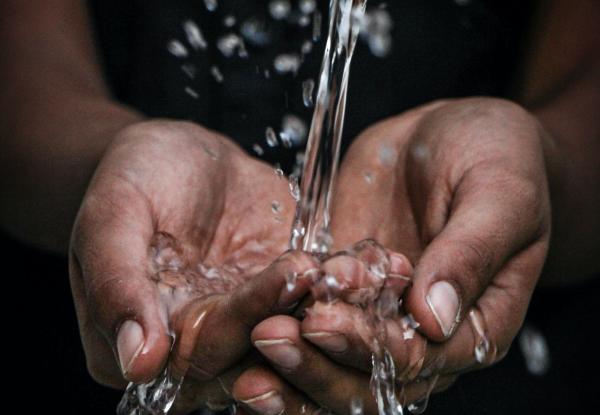
You mentioned it already: water is the main prize. At and& festival you can follow the session 'Why don't we lose more sleep over clean water'. Can you give an example of an investor who resolutely made the turn to more sustainable investing?
‘There are a number of (mostly industrial) companies that are strongly involved in the reuse of water. I am thinking of the oil industry, but also of breweries. One of the things I strongly believe in, in the context of a more sustainable economy, is what is called a circular economy, an economy that aims to reuse raw materials instead of throwing them away. Water is a wonderful example of this.
In the past, all industrial companies simply discharged their waste water. Those companies are becoming more aware of the importance of water. Especially food companies, which have to contend with long periods of drought. They know very well: there's no economy without water. They are going to make a big effort to optimise the use of water in their production process on the one hand, i.e. limit the input of water, and on the other hand, reuse water.
In Europe and the US, people are well aware that in the distribution network 20 to 30% of the drinking water is simply lost. I always say: it gets lost between water tower and water tap, although that is not technically correct. But people have no idea where this water is lost.
Techniques to solve this are strongly promoted by the investment community. The investments can range from checking the network for leaks - completely replacing it is impossible and unaffordable - via camera images, to analysing Big Data, such as invoices. Finally, there are the investment funds for cost-efficient replacement of those network components.
I talk to private clients about these different issues and opportunities and see how we can implement this in their portfolio, depending on how far they want to go in the story of positive social impact.’

That is where the division between ESG investors versus impact investors comes in again?
‘Exactly. In the past you had certain thematic funds that would only invest in water-related companies. Today it has become very accessible. When you talk about water, you can distinguish three types of investors. On the one hand, the classic institutional investors who invest in utility companies, companies that bring water, electricity or gas to your home. And on the other hand, the private investors who go for financial opportunities, for what is then called 'the blue gold'. Lastly, there are the positive impact investors. These investors are focused on contributing to the 6th SDG, "clean water and sanitation." As such, they primarily prioritise the reuse, quality and reduction of water loss.
Impact investors will look at much more than just infrastructure for reusing water. We have plenty of water in the world, but 97% of it is salty. Of the 3% of fresh water, only 0.5% is usable by humans. Investing in desalination of water is still very expensive, but it can make a world of difference, especially in poorer countries.
These are great stories for the future, as are the new upcoming technologies related to water quality. In many emerging countries, there is sufficient water but it is not always of high quality.' A study by The Guardian showed that the drinking water in the US is full of chemicals.’
Is 'too expensive' an argument then, if you look at the investments that have been made in Covid vaccines in the space of a year? We count 2.7 million deaths worldwide due to Covid19. The lethal impact of water pollution is estimated at 1.8 million deaths per year and this has been known for a long time.
'That's a question of priorities.'
Clear. Thank you very much for this enlightening conversation. Which sessions at and& festival are you looking forward to?
‘Margrethe Vestager I find super interesting. I find her fight for that level playing field against all the digital giants enormously brave and enormously fascinating. Those technology giants will have to contribute some solutions too.
One person I did not know yet, but would like to hear from, is Leen Gorissen. She apparently works on the power of nature. It seems that she will explain a number of things from a bio perspective that are relevant for the circular economy. It is about the similar movements. The energy transition from fossil fuels to renewable energy, I find that very fascinating.
Finally, Adaora Okoli caught my eye. As an Ebola survivor, she is familiar with the medical challenge on the African continent. For years now, we have been supporting a hospital in the north of Zambia, close to Congo, through the Leuven non-profit organisation Kamutamba. I would also like to hear that reality from a more academic perspective.’
>> Degroof Petercam is a partner of and& Leuven. Contact and info: https://www.degroofpetercam.be/en/